

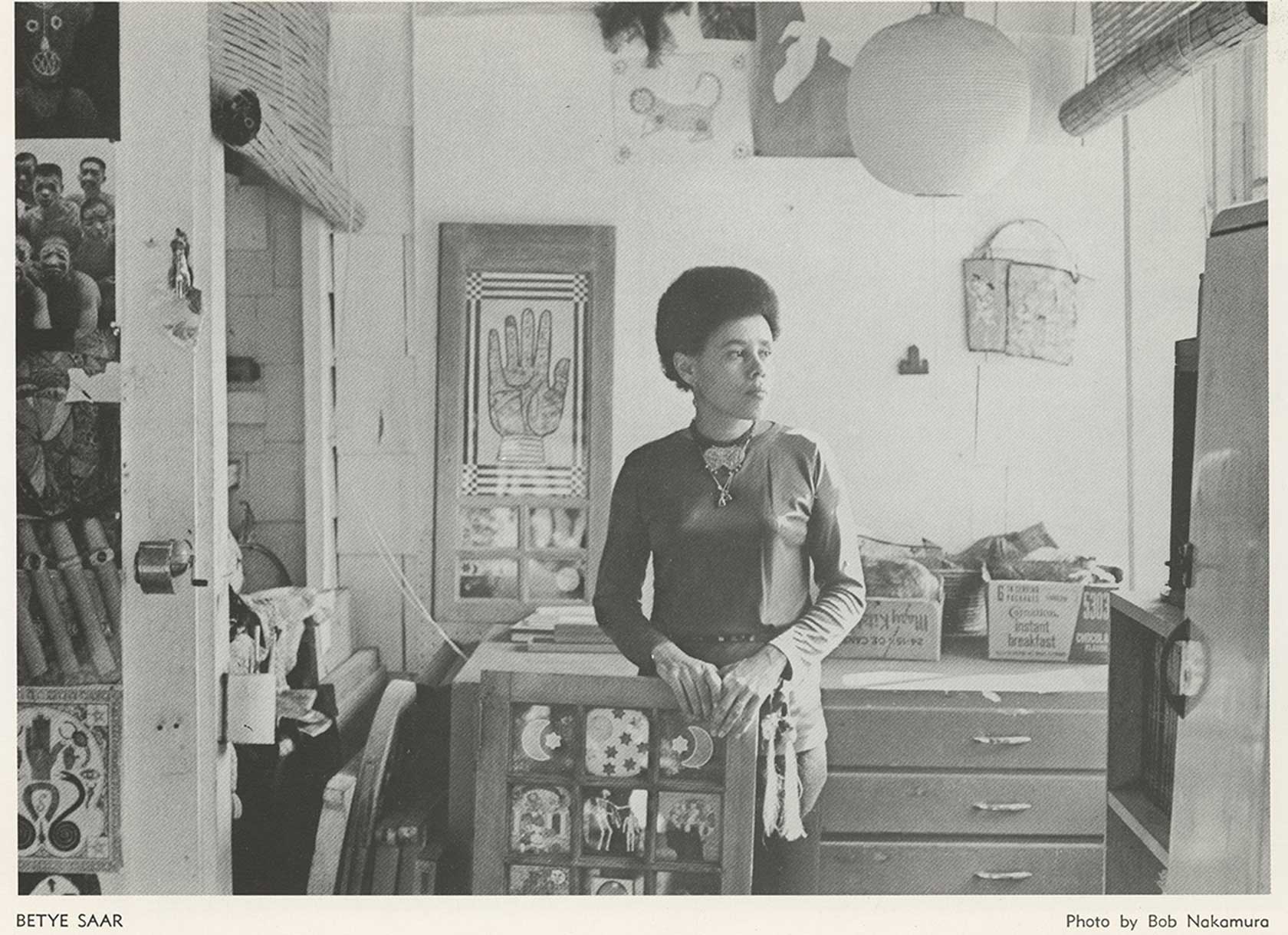
 Betye Saar in her Laurel Canyon studio, 1970. Photograph by Bob Nakamura, Ruth Chandler Williamson Gallery, Scripps College.
Scripps honors the passing of Betye Saar P’78, the groundbreaking artist whose assemblages forced viewers to confront histories of race, gender, and memory. Betye died on July 26, 2026, at the age of 99, just days away from her 100th birthday.
The mother of Scripps alum and fellow celebrated artist, Alison Saar ’78, Betye was a seminal figure in the West Coast Black Arts Movement. She has remained a steadfast source of inspiration for the Scripps community, with former Los Angeles Times art writer Suzanne Muchnic ’62 describing how Betye drew on “the power of mystery, the hurt of discrimination, and the authenticity of individual vision” to help others confront bigotry.
Much of her work focused on reclaiming racist and derogatory figures from flea markets and thrift stores. Her most notable piece, The Liberation of Aunt Jemima, transformed a notepad holder depicting the “mammy” caricature popularized during the Jim Crow era. Instead of a mockery, she made “mammy” into a symbol of power and resistance for Black women—all while acknowledging their history of exploitation.
Betye’s influence extended well beyond museums and galleries. She inspired generations of artists to see assemblage, a 3D art form using found objects, as a vehicle for social critique and personal storytelling. Her work earned widespread recognition in major institutions, including the Museum of Modern Art and the Los Angeles County Museum of Art.
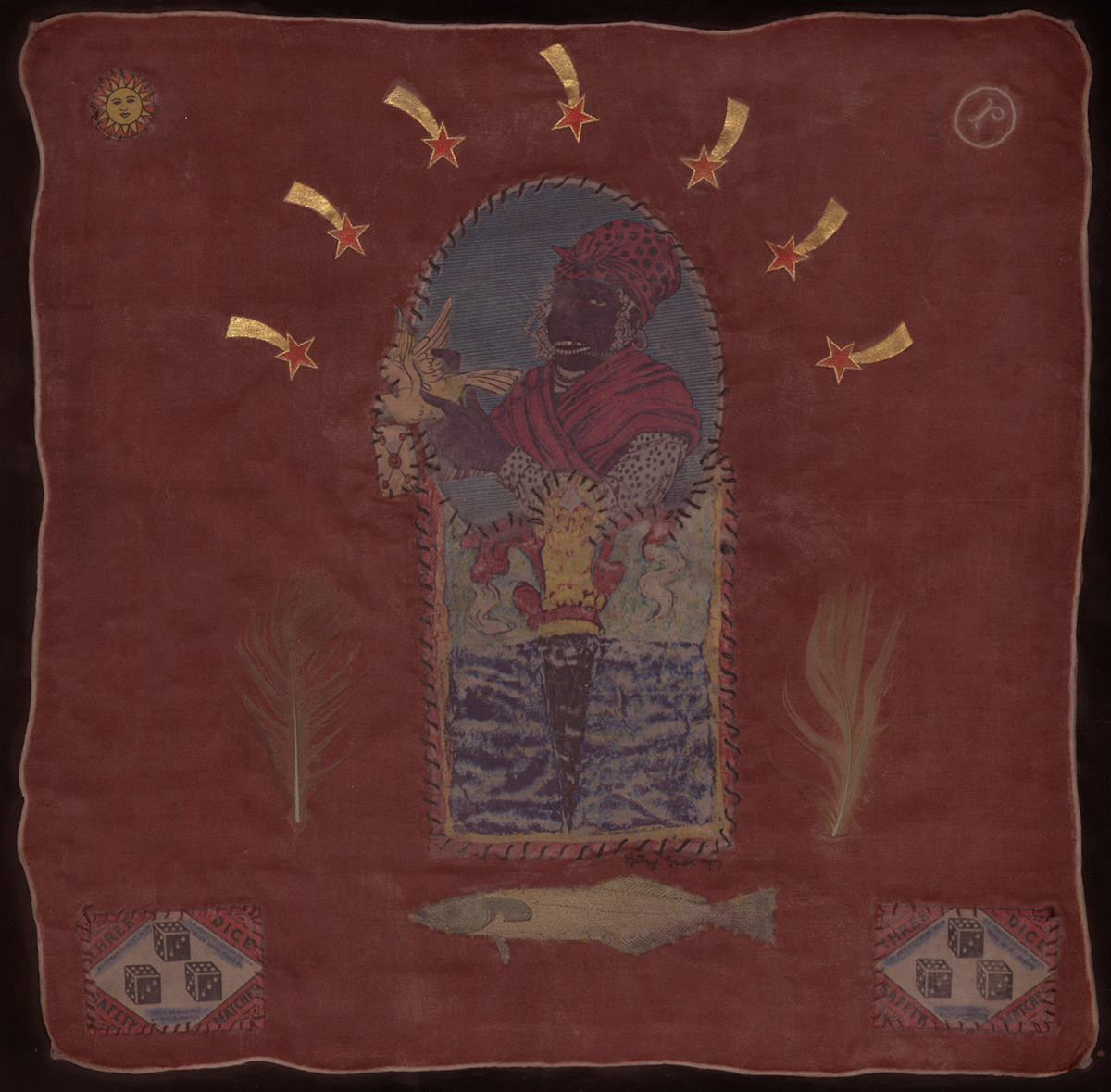
Betye Saar, Hoo Doo Lady with Three Dice, 1977. Mixed media. Scripps College, Samella Lewis Contemporary Art Collection. Gift of Suzanne Muchnic, 2019.16.1
At Scripps College, Betye’s legacy lives on at the Ruth Chandler Williamson Gallery, which holds several works by the artist. In 1970, artist, scholar, and Scripps’ first tenured Black professor Samella Lewis curated the exhibition 5: Benny, Bernie, Betye, Noah & John at the College, featuring works by Betye and fellow contemporary Black artists. Director of the Ruth Chandler Williamson Gallery Erin M. Curtis recently wrote about the exhibition and Betye’s enduring influence in a recent issue of the Scripps magazine.
Betye’s daughter, artist and sculptor Alison Saar, graduated from Scripps in 1978. In 2023, the Williamson Gallery featured mother and daughter in Gettin’ It Done: A Selection of Work by Elizabeth Catlett, Samella Lewis, Betye Saar, Emma Amos, Alison Saar, Letitia Huckaby, LaToya Hobbs, and Kenturah Davis. The exhibition highlighted visionary Black artists whose work permanently shifted the canon of American art. Betye’s work also forms part of the Samella Lewis Contemporary Art Collection at Scripps College, which emphasizes the achievements of women artists and artists of color.
Betye’s impact as a mentor and cultural leader helped shape the course of contemporary American art.
“The loss of Betye Saar is deeply felt at Scripps, where her work has been collected, exhibited, and taught for decades alongside that of her daughter Alison,” says Curtis. “We are profoundly grateful for her vision and groundbreaking contributions to American art, and we remain committed to preserving, studying, and sharing her legacy.”