

Structures of Practice: Building Meaning Through Material and Form
Islam Aly
February 11, 2026
1:00pm
Founders Room, Honnold Library
1PM Pop-up display i
1:30PM Talk
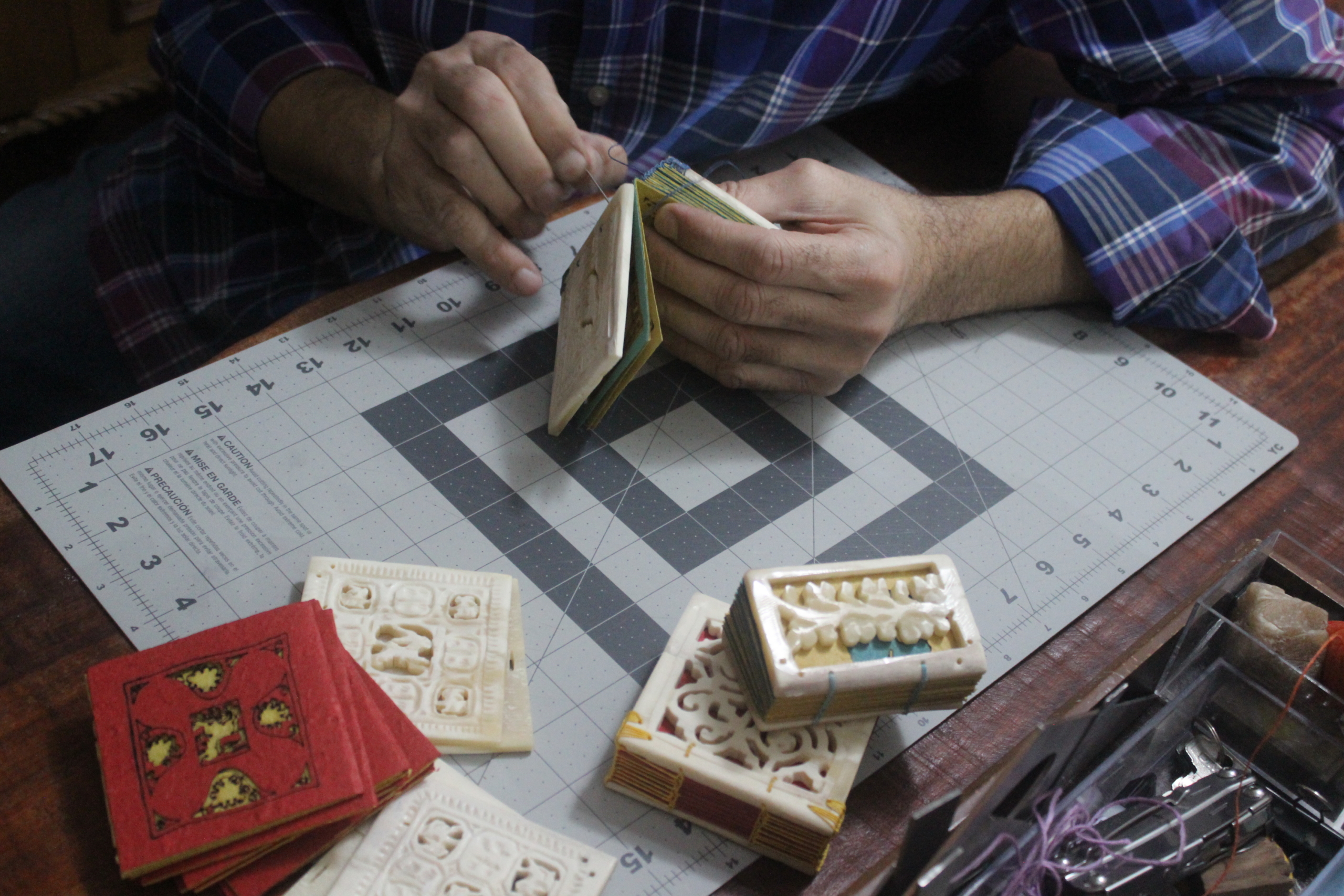
Islam Aly discusses the evolution of his book arts practice, from his early training as a student to development as a professional artist. He highlights how foundational studies in traditional bookbinding informed later experimentation with structure, materials, and concept. Through selected binding projects, Aly addresses key moments of transition and innovation, including the incorporation of new technologies and the development of artists’ books that engage with social justice concerns, reflecting his ongoing interest in expanding the artist’s book as both an object and a vessel of meaning.
Islam Aly is a book artist and a lecturer of Bookbinding at the German University in Cairo. He earned both his Bachelor’s and Master’s degrees in Art Education from Helwan University, and later pursued an MFA in Book Arts at the University of Iowa, where he refined his artistic focus. He went on to complete a Ph.D. in Teaching and Learning with a concentration in Art Education at the University of Iowa.
Aly’s work addresses social justice through themes of immigration, cultural memory, and identity, examining how displacement, belonging, and transformation shape individual and collective narratives. His artworks challenge conventional definitions of the book, using it as a site for storytelling, resistance, and preservation in response to lived experiences of migration. While engaging with new technologies, Islam remains deeply invested in the tactile and sensory qualities of traditional book forms, exploring how embodied material experiences can coexist with, and critically respond to the immediacy and reach of digital tools in an increasingly interconnected world.
Frederic W. Goudy lectures are free and open to the public.
Please note that Frederic W. Goudy Lectures are free and open to the public.
| Previous: Artist’s Books and Environment: How Humans Shape the Natural World | Next: Kapa (Hawaiian Bark Cloth): a Cultural Foundation of the Past, Present, and Future |