

With support from a Scripps Undergraduate Research Fellowship, Gabri Sabo ’27 has blended science and art to create wearable pieces from natural materials. Her solo art show, Embodied Ecology, challenges fashion’s environmental costs to inspire more sustainable living.
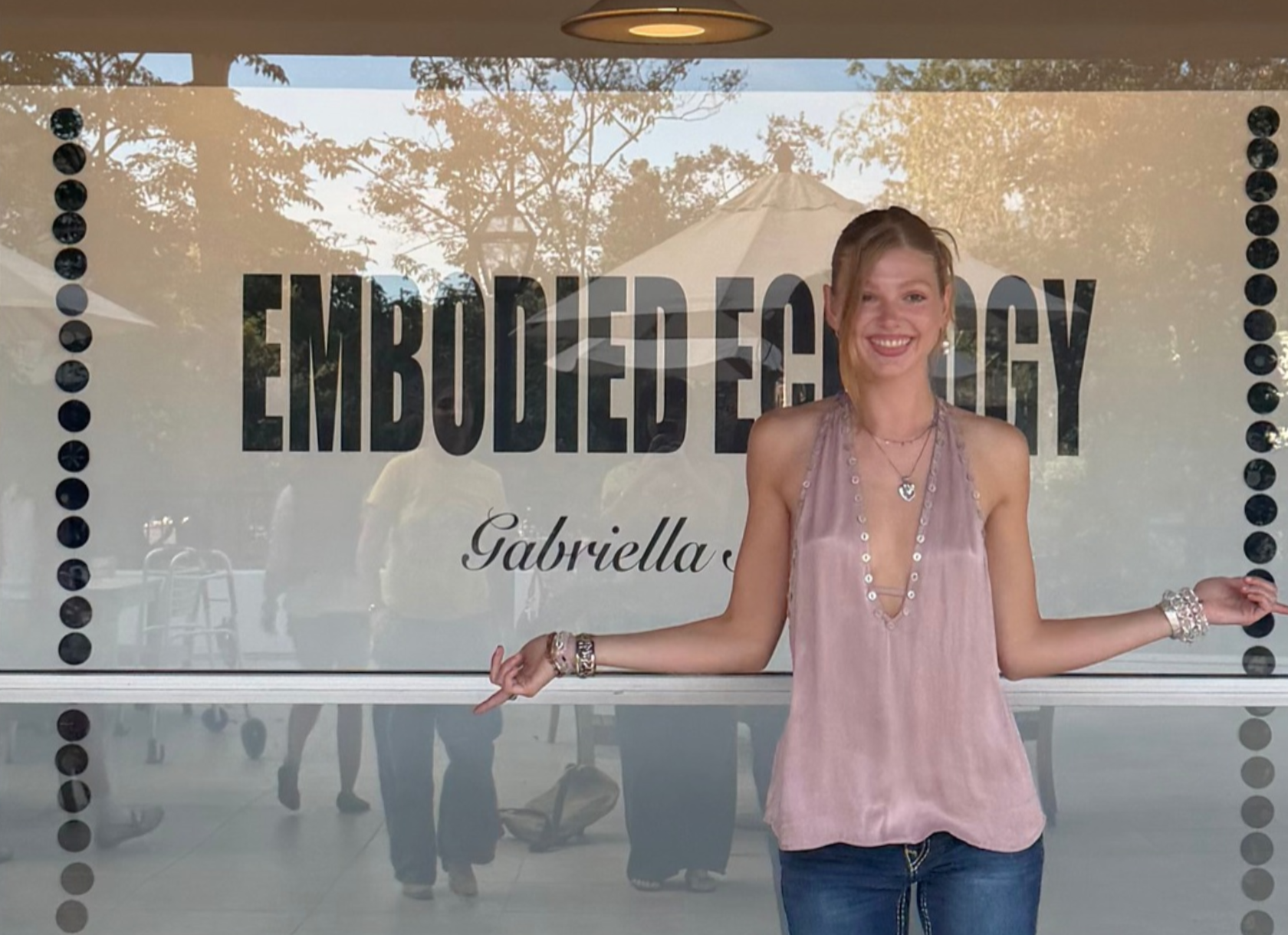
Gabri Sabo ’27
By Nichola Monroe ’27
Art and environmentalism are not an uncommon combination at Scripps. Here, students pursue scientific research and discovery to create art that evokes emotion and inspires action. Grant recipient Gabri Sabo ’27 spent her summer doing exactly this.
With funding to support her innovative research, Sabo created wearable art—but instead of using conventional textiles, she grew bioplastics and leathers at home and in the lab. This fall, the senior included selections of her work in her solo art exhibition, Embodied Ecology.
“I’m really interested in fashion, but it’s difficult because the industry can be very destructive,” Sabo explains. “I wanted to see if there was a way in which it could not only be sustainable, but also regenerative.”
Sabo approached her materials as collaborators, experimenting with how they grow, resist, transform, and decompose. Her resulting Embodied Ecology is a world in which fashion and living systems meet.
From Grant to Graft: Funding, Inspiration, and Process
Earlier this year, Scripps’ Department of Natural Sciences awarded Sabo an Undergraduate Research Fellowship in Environmental Analysis, designed for recipients to research and develop their senior thesis. Its only requirement? The project must be interdisciplinary and related to human interaction in the environment.
“I’ve always been drawn to adorning the body, building off of it, and emphasizing its natural softness and curves,” Sabo says. “Using natural materials has worked really well for me in exploring that.”
No one properly understood what she was trying to achieve at first. As the scent of vinegar filled Sabo’s kitchen this summer, all her family knew was that she was growing huge sheets of kombucha SCOBY (symbiotic culture of bacteria and yeast), a strange and slimy substance.
“My mom got so mad that she banned me from doing experiments in the kitchen,” Sabo explains. “She didn’t like when I had creepy stuff drying on the patio. But after the exhibition, she told me she was humbled.”
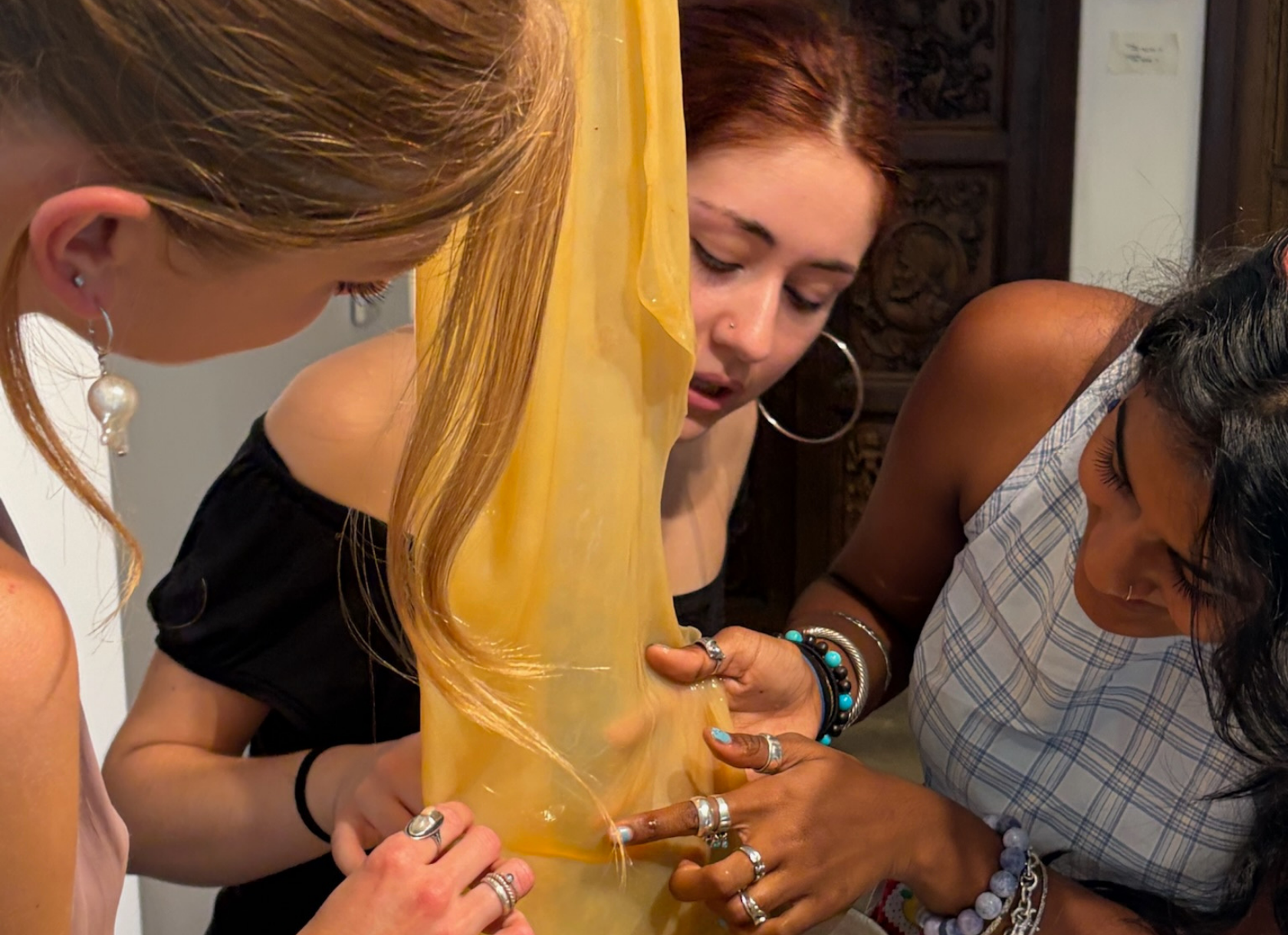
Students at Embodied Ecology playing with sheets of SCOBY
Sabo drew inspiration from her Microbes in Art class with Scripps’ Associate Professor of Biology Pete Chandrangsu. Here, she learned how to restore decayed art pieces, grow SCOBY, and dye and draw with microbes.
“At first, you can’t see the work before it grows. It’s so cool because it appears all of a sudden,” Sabo says of drawing with bacteria. “When drawing on a Petri dish with microbes, you can control where you want them to be in the beginning—but then they take over, which is the beautiful part.”
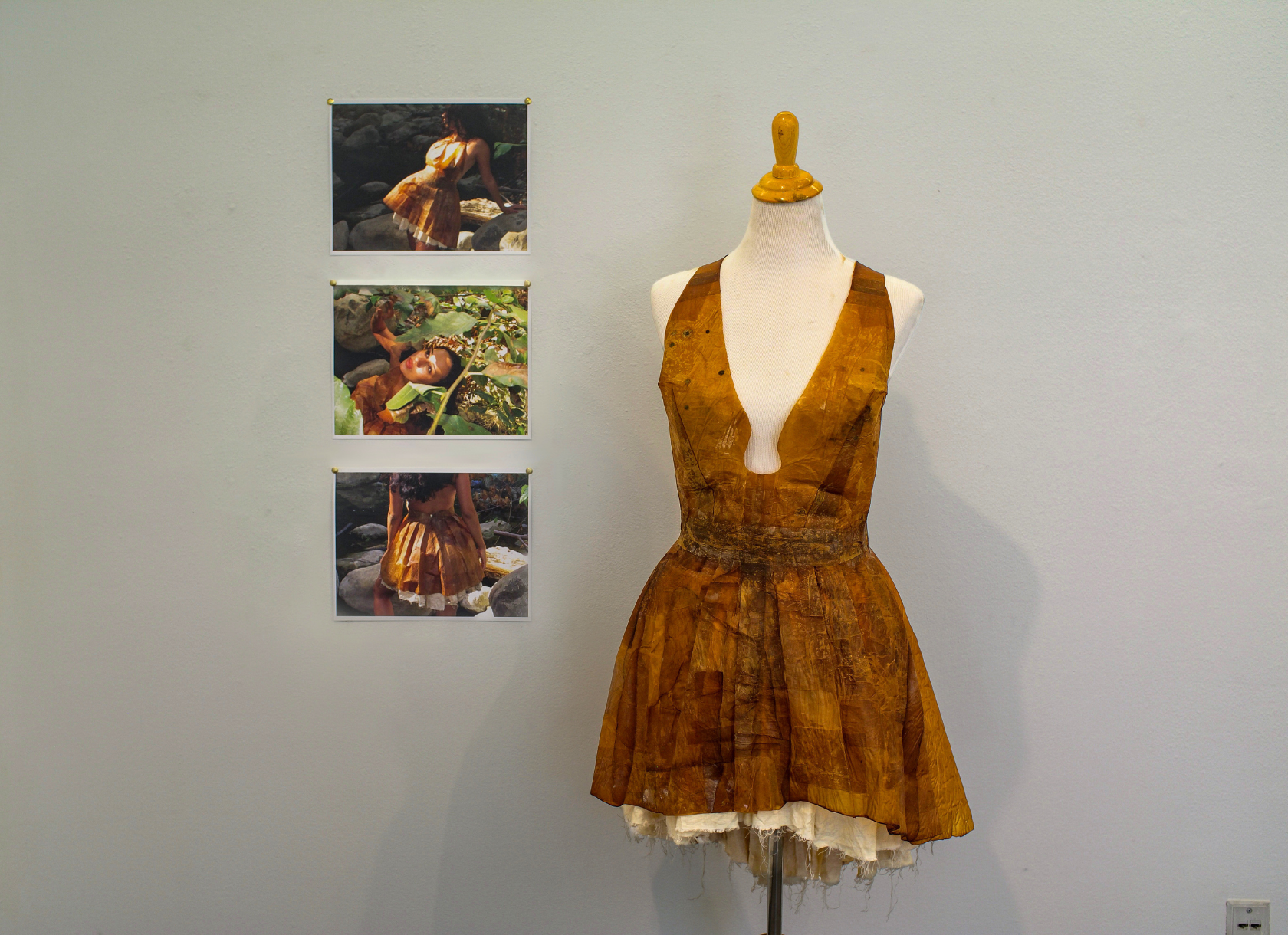
After many iterations of kombucha fermentation, Sabo found a recipe that worked for her vision: She could now dry SCOBY grafts into wearable leather. It took a month to nail down her recipe for bioplastics as well, which she made by emulsifying food waste with cornstarch and glycerin.
The Experiment Becomes an Exhibition
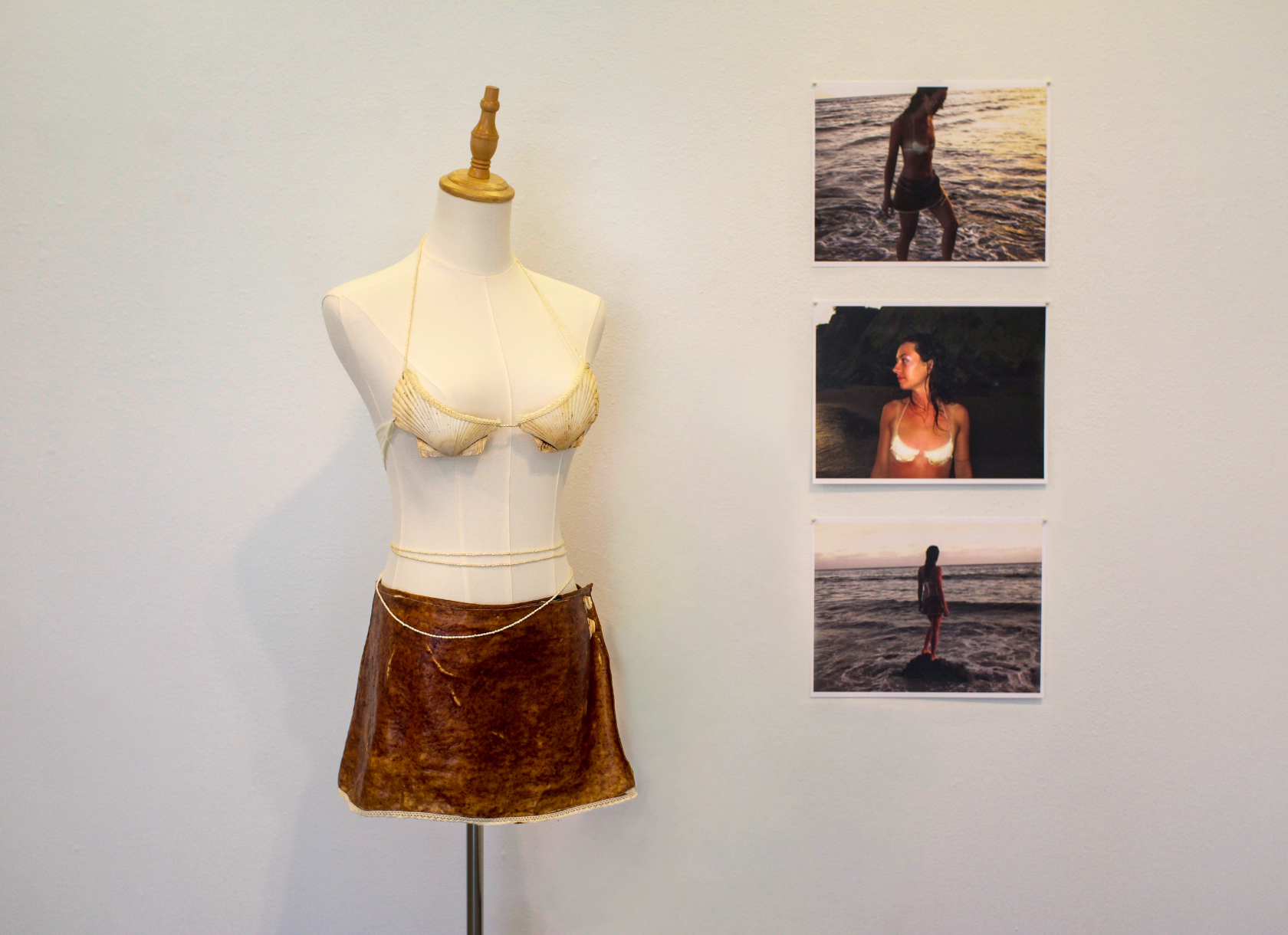
Embodied Ecology features five handmade pieces. Each guides the audience through synergy, ecology, renewal, and decomposition, exploring interdependence between humans and the environment. For Sabo, the works invite the viewer to reconsider where the body ends and nature begins.
“Science is very objective, which can be discouraging when facing the climate and our outlook on the world,” Sabo says. “Art brings more emotion and different perspectives into these ideas, which can appeal to audiences that might not be as affected by quantitative results. Sometimes, you just have to see something that interests you to understand or start to care.”
Among the five pieces in Embodied Ecology were a custom dress made from dried SCOBY, a seaweed skirt, cornstarch-based lace, and a cast of Sabo’s torso—growing over with pink oyster mushrooms.
“I hope my audience comes away with an emboldened perspective of the ecosystems we exist within. Having an extractive mindset is only going to harm us,” Sabo says. “We’re so materialistic, so let’s ask ourselves: How can we still enjoy beautiful things and decorate ourselves without harming the environment?”