

In a first-of-its-kind Core class on Scripps’ history, first-year students uncover the people and traditions that shaped the College, from NASA’s longest employee Susan Finley ’58 to ghost lore to the land around campus.
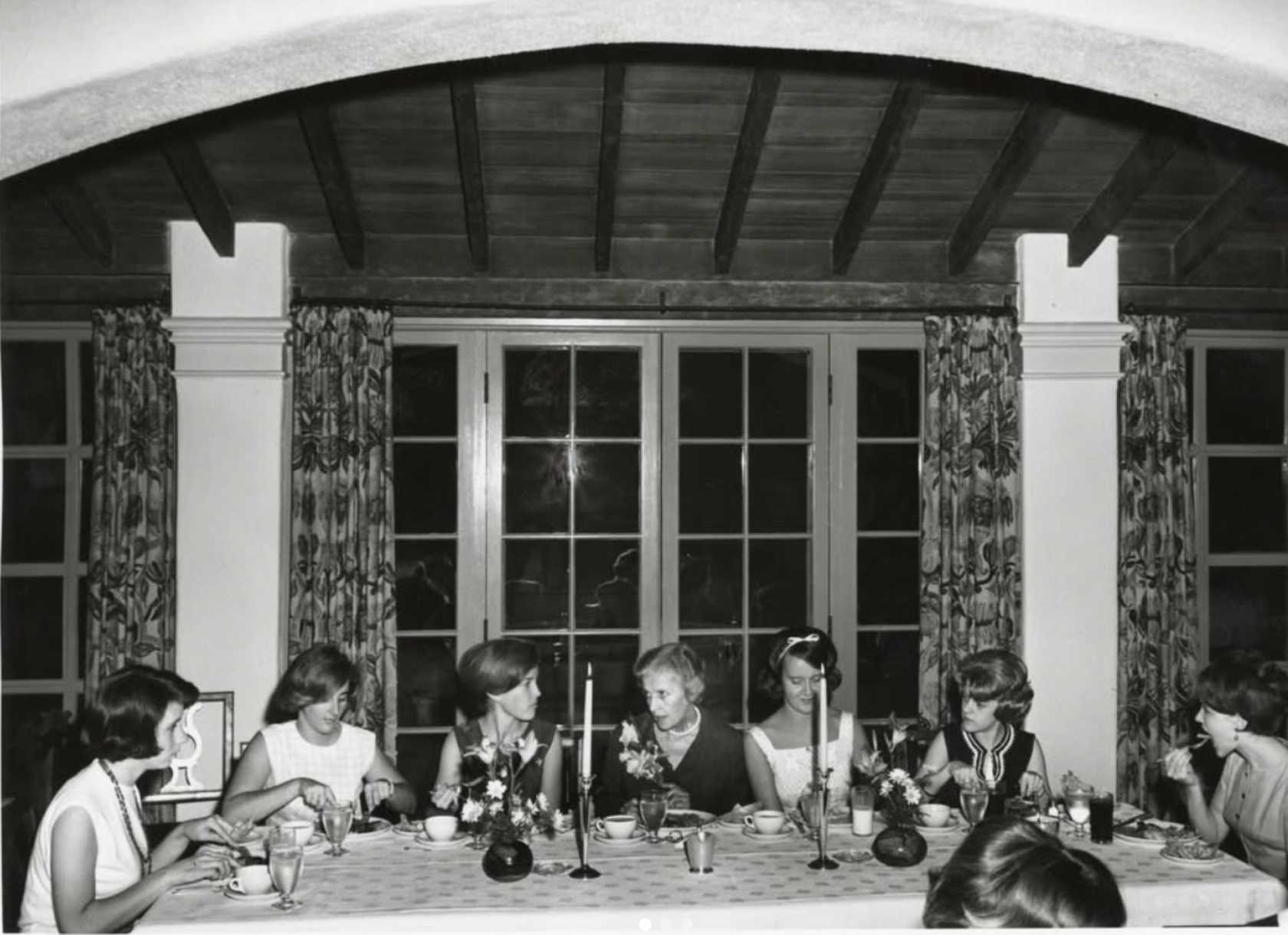
Scripps students at a candlelit dinner in their residence hall
By Emily Glory Peters
For many students who attend Scripps, the eponymous name—and the College’s fascinating past—remain a mystery. With the launch of Scripps’ centennial this spring, Professor of Music Hao Huang engineered a unique assignment for his Core B class.
“I’ve been here over twenty years, and this is the first course we’ve offered on the history of Scripps and women’s colleges. It’s been so great to see first years learn about Ellen Browning Scripps being an incredible patroness, advancing everything from this College to social movements,” he says.
Expanding on this knowledge, Huang asked his students to find a person, place, or topic connected to Scripps.
“The students’ final creative projects explore Scripps’ past,” says Huang. “They’re writing songs, creating scrapbooks, even designing puzzles.”
Honoring the Centennial, Unveiling Scripps’ History
Scripps’ Core Curriculum in the Interdisciplinary Humanities is the polestar of the College’s academic program, with all incoming students completing two Core classes. First-years unpack complex topics that strengthen their research skills and information literacy, with the sequence culminating in a showcase of their work.
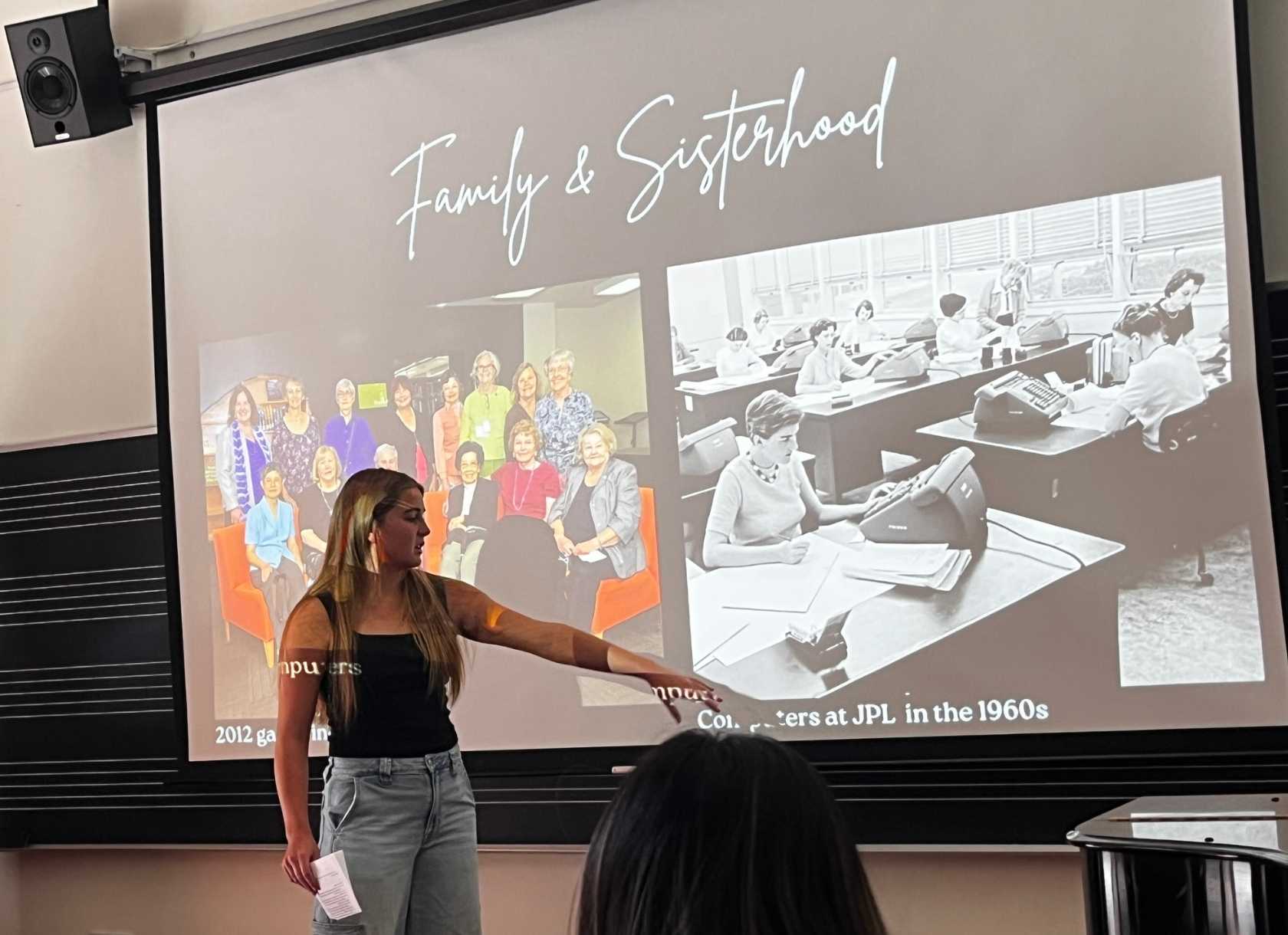
Grace Rich ’29 presenting on Sue Finley ’58
Grace Rich ’29’s journey led her to Susan Finley ’58, the longest-serving female employee at NASA. Over spring break, the pair swapped stories over a meal at Finley’s Pasadena home.
“I was interested in why she committed to a career that she keeps doing at 90 rather than being pulled away by things like money,” says Rich, who is designing a puzzle of Finley’s life. “Finley credits her longevity to luck, but I disagree. Her top values are family, passion, and loyalty. ”
When Scripps was built, its area was isolated and undeveloped. But it’s important to know the history of the land and its connection to our culture.
Like Rich, Claire Gillen ’29 began her research on an alum—student body president Fay Dreher Pearson ’59—only to discover obscure details on campus culture. Student government minutes discussed events like May Fete, ranch parties, homecoming, Quad-College dances, and the enigmatic “Surprise Day.” Gillen expressed a desire to revive more well-known traditions, like the candlelit dinners once held in Scripps’ residence halls.
Some topics explored lore embedded in the campus itself. Bela Deol ’29’s inquired into Scripps ghost stories, including the “Lady in White” who reportedly haunts Clark Hall. She chose the subject “not to prove the supernatural, but because ghosts are a way of sharing history in an interactive way that we can all be involved in.”
Looking on campus, Maika Valerio ’29 examined students’ fashion as clues to social and political movements, while Lucy Sandrose ’29 looked beyond Scripps to trace how the disappearance of nearby citrus groves affected Chinese, Indigenous, and Latino laborers.
“When Scripps was built, its area was isolated and undeveloped,” Sandrose says. “But it’s important to know the history of the land and its connection to our culture.”
The great thing about history is how it brings you closer to people and places. These aren’t just names in a book—they’re real people we share experiences with. Scripps’ impact is cross-generational.
Forging Cross-Generational Bonds
For Huang, watching these bonds form between his students and Scripps’ founder, alums, the College’s legacy has been especially moving.
“The great thing about history is how it brings you closer to people and places. These aren’t just names in a book—they’re real people we share experiences with,” he says. “Scripps’ impact is cross-generational, and isn’t that real community? We wouldn’t be here without them.”
Engage with Scripps’ Centennial Celebration! Please visit scrippscollege.edu/centennial to learn more.