

Scripps first-year Margaret Kaneb ’29 flexed her policymaking muscles by participating the the Rachel Carson Advocacy Days, an event that brings students to capitol hill to advocate for environmental reform.
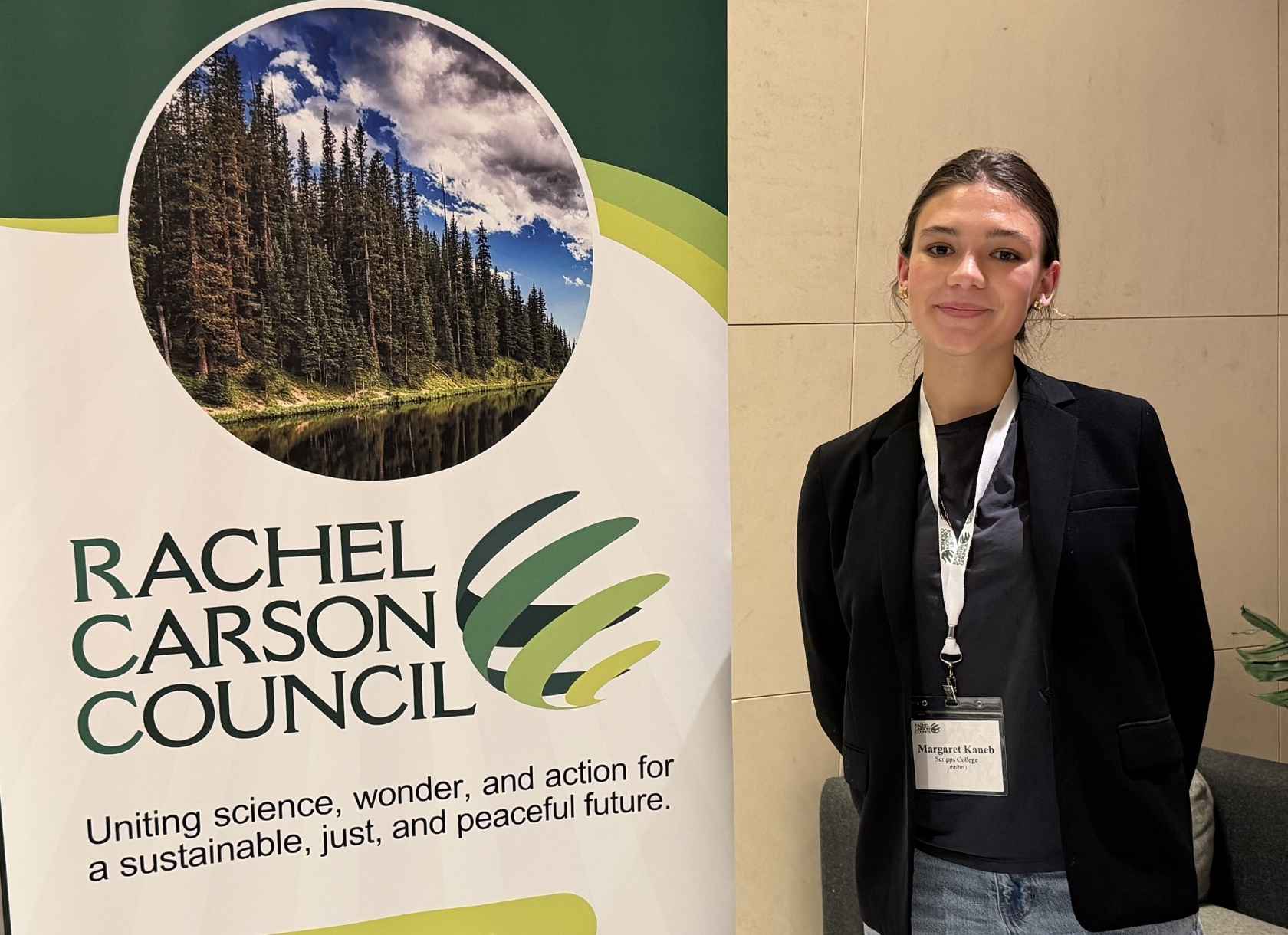
Margaret Kaneb ’29 in DC
By Nichola Monroe ’27
Opportunities to gain hands-on experience abound at The Claremont Colleges. Most recently, Scripps first-year Margaret Kaneb ’29 traveled to Washington DC with the Rachel Carson Council (RCC) to speak to senators and representatives about environmental justice reforms.
RCC is a nonprofit advocacy group that works to carry on the legacy of its founder and namesake Rachel Carson, a renowned marine biologist and conservationist.
“RCC promotes Carson’s ecological ethic and combines scientific concern for the environment with human health,” explains Diego Tovar, director of campus and civic engagement with the organization. “We add a sense of wonder and curiosity to an intergenerational, intersectional environmental movement.”
The council hosts advocacy days each year, inviting students from its network of over 93 colleges and universities to DC to propel Carson’s sustainable agenda on Capitol Hill. A double major in environmental science and English, Kaneb heard about RCC’s advocacy days from a 5C environmental science mailing list.
“I try to apply myself as widely as I can, and am always filling out applications for programs, conferences, and internships,” says Kaneb of her selection to participate. “The biggest thing I’ve had to do is reflect on myself and what drives me. Having a clear understanding of your personal values and interests is important, because articulating your ‘why’ is what people want to see.”
Wielding Influence on Capitol Hill
This March, Kaneb found herself headed to DC with more nearly 100 students to meet with three dozen congressional offices. The issues at hand: the greenwashing of wood pellet energy and pesticide preemption. Students worked together to pinpoint how these policies and their advocacy aligned with each congressional office’s initiatives and interests.
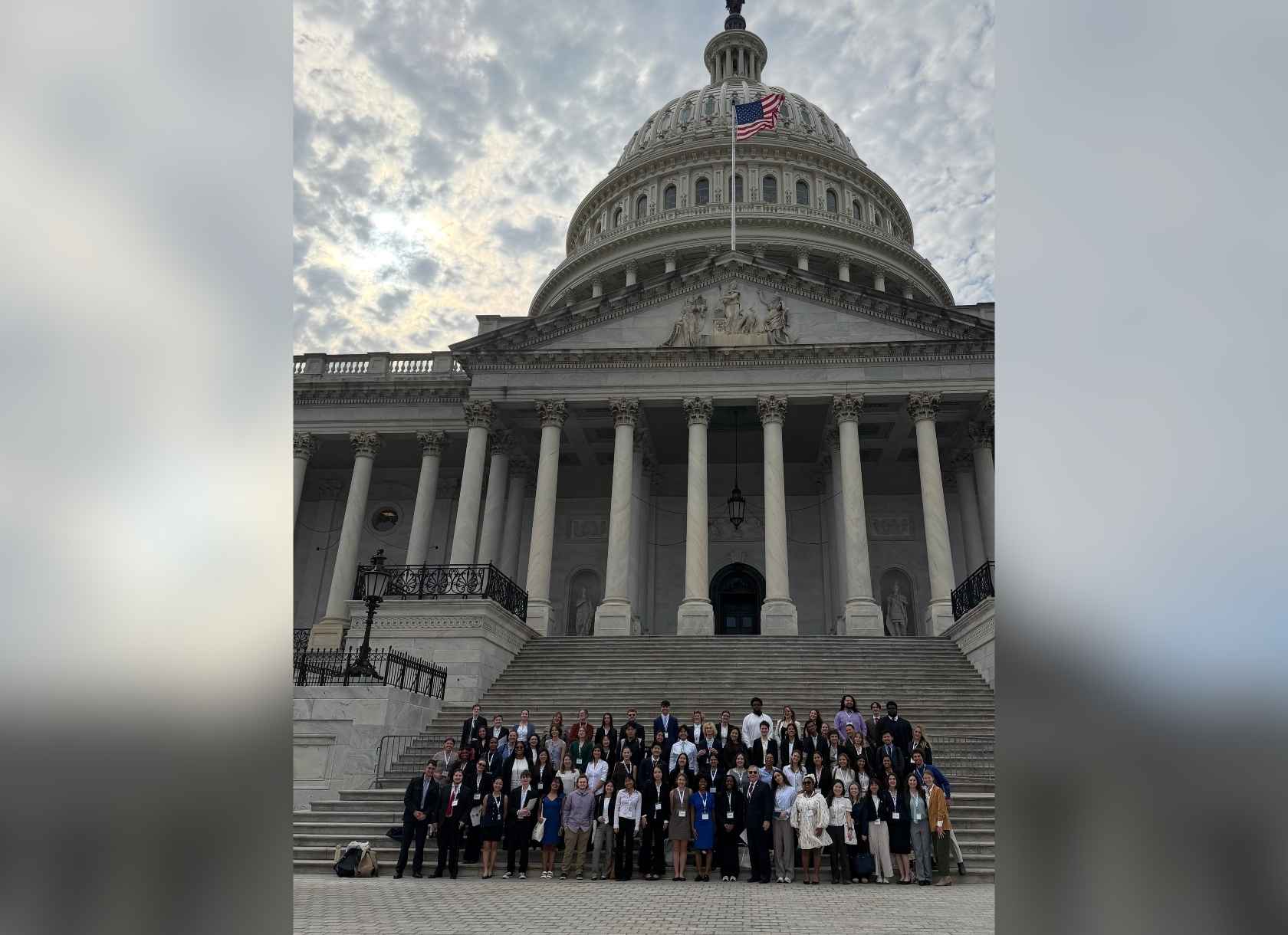
RCC Advocacy Days participants
“For many students, this is their first time speaking and engaging with policymakers on Capitol Hill. That’s powerful, because they realize their perspective is directly influencing the environmental policy space on a national level,” says Tovar. “Advocacy days, where students advocate for legislation, can get congressional offices to either sponsor or co-sponsor certain bills.”
Kaneb’s group spoke to staffers in the offices of junior Senator Adam Schiff (CA), Senator Alex Padilla (CA), and Representative Jan Schakowsky (IL).
“The high point was definitely when we got to meet directly with Senator Judy Chu, whose district includes Claremont,” says Kaneb.
Experiential Learning as Pre-Professional Development
Advocacy days have also become critical pathways for students aiming to work in environmental policy. They gain real-world advocacy experience, which equips them with tools, access, and confidence to continue the work in their own careers.
From a climate justice and advocacy element, [environmental issues] are so intersectional and involve every professional world. Wherever I land in my career, it will be a relevant topic.
“This was my first time wearing a proper suit, which was really exciting. Even though it sounds superficial, it’s not. The professional development aspect is invaluable,” Kaneb explains. “I appreciated the semi-low-stakes setting in the sense that I wasn’t presenting to a room full of people. It’s so helpful to have those moments of gaining confidence through experiences like this.”
Having returned from DC, Kaneb is looking into internship opportunities with local representatives to continue the work she started in March. She notes the critical value of students continuing to advocate for whatever they are passionate about—to “have an idea, plan a project, and see it through” in college and beyond.
“From a climate justice and advocacy element, [environmental issues] are so intersectional and involve every professional world,” she says. “Wherever I land in my career, it will be a relevant topic.”