

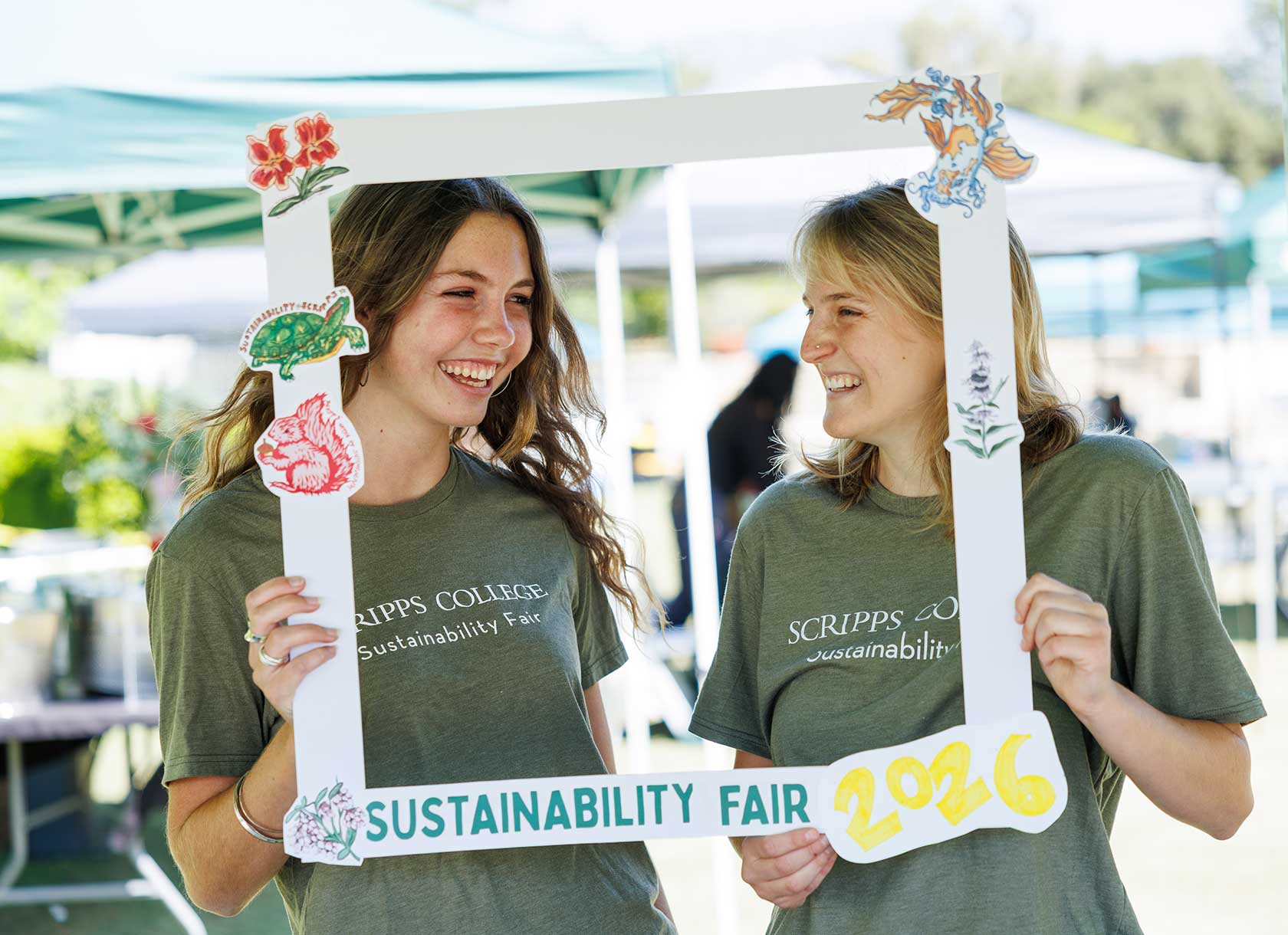
Students at Scripps’ 2026 Sustainability Fair
By Caitlin Antonios
- The new 2025 Sustainability Report highlights measurable progress in water conservation, waste management, and other eco-friendly practices to ensure that Scripps thrives for the long haul.
For a century, Scripps College’s historic buildings and serene botanical campus have become a second home to the thousands who have lived and worked here. What’s lesser known is how the College is actively preserving this special place through sustainable stewardship.
Scripps’ Sustainability Report is released each year to boost awareness and transparency around these efforts. The new 2025 Sustainability Report highlights measurable progress in water conservation, waste management, and other eco-friendly practices to ensure that Scripps thrives for the long haul.
“This report allows our community to learn more about the progress we’ve made,” Sustainability Coordinator Abigail Balais says. “I’m excited to use our findings as tools to help inform how we can continue to grow.”

Key Takeaways from the 2025 Sustainability Report
Among Scripps’ most significant accomplishments is a series of landscape improvements designed to conserve water—a crucial priority amid California’s ongoing drought conditions.
At Hibiscus Court and Clark Hall, facilities crews converted planters to drip irrigation, replacing less efficient watering methods with a system that delivers water directly to plant roots. The College also removed water-intensive hibiscus hedges to reduce overall irrigation demand. New upgrades to irrigation infrastructure now meet California’s Model Water Efficient Landscape Ordinance (MWELO) standards.
This year’s report also showcases annual waste diversion data, which details the amount of waste Scripps successfully diverted from landfills. The information provides a more complete picture of campus operations while strengthening the accuracy of the College’s environmental reporting.
The Future of Sustainability at Scripps
Progress isn’t stopping here. With the announcement of Scripps Forward, the College’s ambitious campaign to raise $100 million, the College will introduce more innovative solutions to reduce carbon emissions and create shared ownership over the campus’s footprint.
Educating students on the importance of sustainability inside and outside the classroom is integral to creating a sustainability-conscious campus culture
For Balais, that involves integrating environmental action into daily life at Scripps, with students free to lead green efforts across campus. Last year, students helped orchestrate Scripps’ 14th Sustainability Fair, a consortium-wide event advancing sustainable projects on and off campus.
“I aim to expand the Office of Sustainability’s campus presence through student-led workshops and collaborations with faculty to integrate sustainability into coursework,” Balais says. “Educating students on the importance of sustainability inside and outside the classroom is integral to creating a sustainability-conscious campus culture.