

By Caitlin Antonios
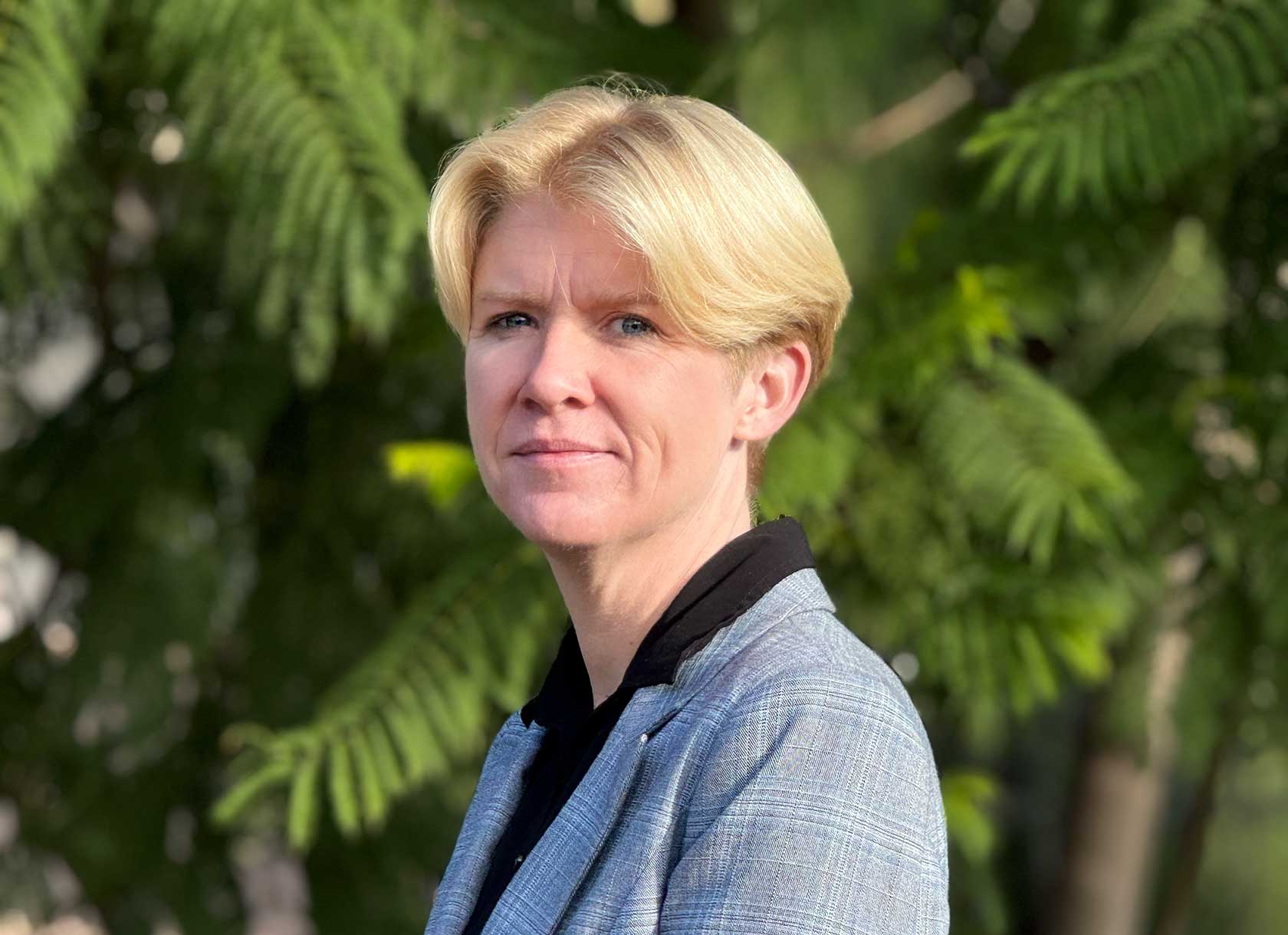
When Valerie Newcomb agreed to take on the role of Title IX and civil rights coordinator at Scripps College, she knew the work would be daunting. Newcomb arrived on campus in April 2024, near the end of the academic year, taking advantage of the quiet hallways and calm campus. She soon acclimated to Scripps’ culture and the needs of its students as a women’s college, all while navigating recent federal changes to Title IX.
“I want to stand for something greater than myself,” she says. “A college environment is the space to address and intervene to stop harmful behaviors before they get worse.”
Her goal is clear: Ensure that everyone— including employees who are also covered under Title IX protections—feels seen, heard, and that their concerns are addressed through a fair, transparent, and neutral process.
Expanding the Title IX Role
Former President Richard Nixon signed Title IX into the Civil Rights Act in 1972, applying the 14th Amendment which outlines that no state can “deny to any person within its jurisdiction the equal protection of the laws” based on sex. As cultural and social understanding of sex and gender have expanded over the years, so has the Title IX umbrella.
In January 2025, the US Department of Education announced it would roll back Title IX protections to the traditional definition of sex assigned at birth, leaving some students marginalized. To protect students and employees, the College expanded the Title IX coordinator’s responsibilities to include both Title IX and civil rights issues.
Sha Bradley, vice president for student affairs and dean of students, notes that the Title IX coordinator search committee and interview process included input from Scripps students and staff.
“We conducted an incredibly thorough and thoughtful search to find the right person for this role—someone who not only brings deep expertise, but also a genuine connection to our community’s values,” Bradley says. “Valerie stood out because of her expertise, experience in the higher education landscape, track record of collaboration, and commitment to students, staff, and faculty.”
Since her arrival, Newcomb has been working closely with Scripps Advocates, a confidential 7C resource for survivors of sexual assault, intimate partner violence, and stalking. She’s also connected with student groups to understand how her office can best serve them.
“Inclusion is a journey; it’s dynamic and changing,” Newcomb says. “We have to constantly ask how we’re listening and gaining trust to continue to be inclusive as every new person joins the community.”
Born in Upland, California, Newcomb attended the University of San Diego for her undergraduate degree, then received her JD from Case Western Reserve University School of Law and began working for the US Air Force. In 2020, Newcomb began working with higher education institutions in Colorado focused on civil rights resolutions. Prior to coming to Scripps, she worked at Caltech in Pasadena as a Title IX coordinator. Her methodical approach is rooted in years of experience as a litigator and mediator, and a commitment to standing against civil rights infringements— sometimes even at the risk of losing her job.
In 2010, while the “Don’t Ask, Don’t Tell” policy was in effect, Newcomb refused to approve discharges of service members based on their sexual orientation. That same year, she was deployed to Afghanistan where she experienced a traumatic brain injury that affected her ability to quickly connect words to thoughts. It was an eye-opening experience that led to a focus on mediation.
“It’s easy to just fill the void by talking— but in mediation, I learned to listen,” Newcomb says. “My job is to amplify; to truly listen and hear people’s experiences.”
Looking Ahead
Newcomb underscores that, in addition to legal obligations to guard against and respond to discrimination on campus, success in her role demands respect for a person’s experience and feelings, regardless of intention.
“The law governing Title IX is nuanced,” she says. “But people can feel a certain way in response to behavior. They don’t have to justify those feelings.”
As she settles into her role, Newcomb is eager to partner with students to stay on top of the emerging issues they face— especially ones that could be uncomfortable to share. She sees herself as a liaison between what students, staff, and faculty need and the resources the College can provide to address them. For her, that starts with treating all who enter the safe space of her office with dignity— and growing her team in the future.
“Scripps is bringing in people from different backgrounds to implement best practices,” Newcomb said. “I’m excited to collaborate!”