

By Kendra Pintor
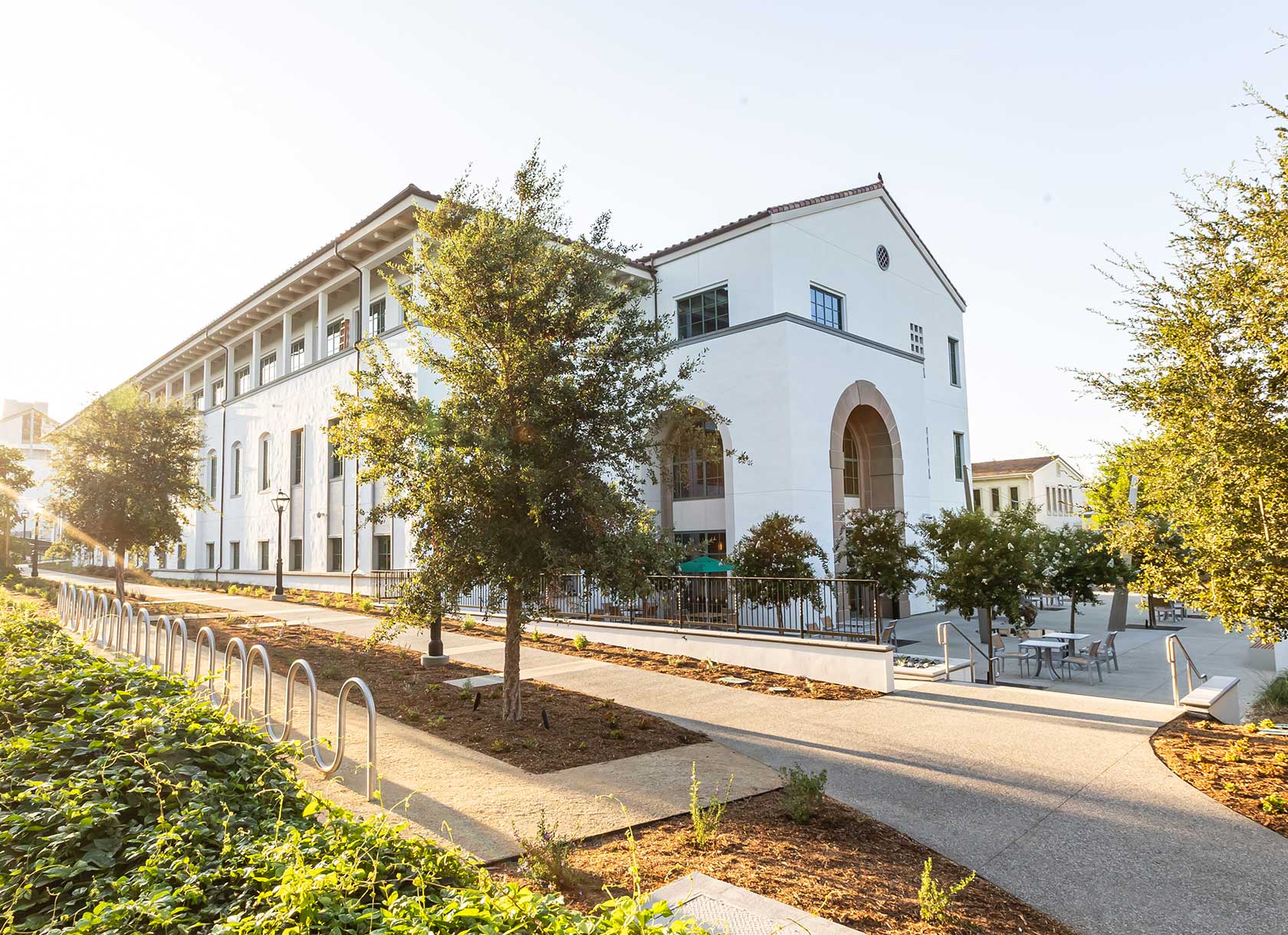
When Scripps and Pitzer Colleges first envisioned The Nucleus—a bold, interdisciplinary hub designed to catapult STEM education into the future—the dream felt as ambitious as it was inspiring. Today, thanks to the generosity and shared vision of our donor community, that dream is here, and it’s transforming the lives of students and faculty every single day.
Officially opened in fall 2024, The Nucleus is a 65,000-square-foot, state-of-the-art science center featuring innovative laboratories, flexible classrooms, community meeting spaces, and light-filled courtyards that have quickly become a destination for curiosity, collaboration, and discovery. Serving as home for the Department of Natural Sciences (formerly known as the W.M. Keck Science Department) shared between the two institutions, this multimillion investment is already elevating the sciences at Scripps in ways that ripple far beyond its walls.
Where Innovation Meets Opportunity
Despite persistent gender disparities in STEM—women made up just 30 percent of the North American STEM workforce in 2025, according to the Women in STEM Network—Scripps College continues to defy national trends. Today, 40 percent of students over the past five years have selected STEM majors.
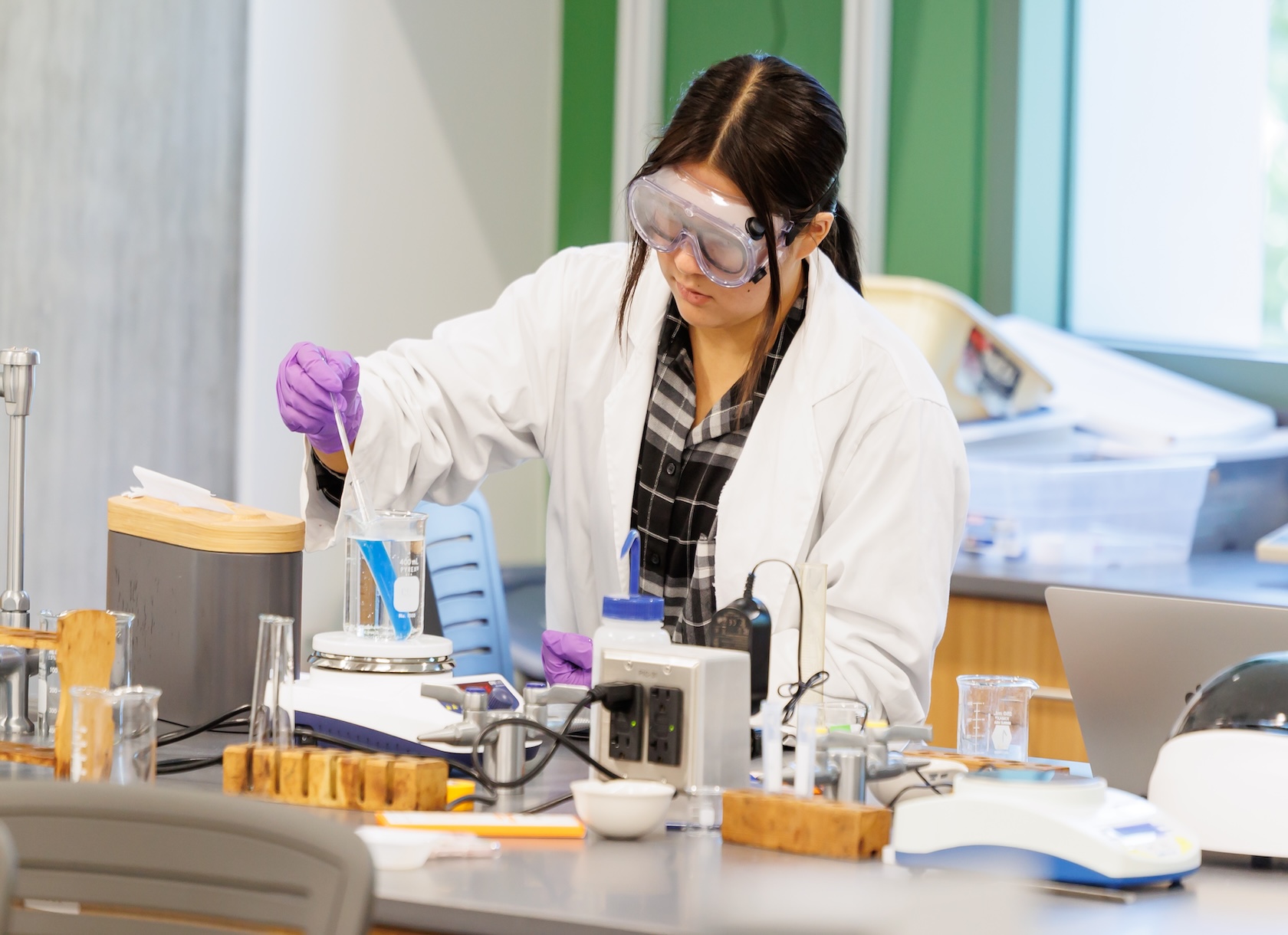
As a women’s college dedicated to equity and academic excellence, Scripps is uniquely positioned to help close this gap—and The Nucleus is accelerating that momentum. By expanding faculty, increasing access to cutting-edge research spaces, investing in computational science through visionary endowed support, and designing interdisciplinary laboratories where students gain real-world skills, Scripps is cultivating an environment where women thrive in STEM.
“The Nucleus is more than a building,” says Scripps College President Amy Marcus-Newhall. “It’s a symbol of what the Scripps community can accomplish when we combine our collective ingenuity, resources, and determination to achieve what others may believe is impossible.”
This impact isn’t confined to campus. Scripps alums persist in STEM careers at significantly higher rates than their peers, with nearly 84 percent remaining in the field, compared to the broader national trend in which half of women leave the STEM workforce within 12 years.
Faculty at Scripps are also leveraging The Nucleus in ambitious, interdisciplinary research projects that have attracted competitive grant funding from major organizations such as the National Science Foundation and the National Institutes of Health. These early awards underscore the center’s immediate impact on scholarly excellence innovation. Below are just a few of the recent awards Scripps’ STEM faculty have received:
The opening of the Nucleus has also fueled curricular innovation for the Department of Natural Sciences. With a 60 percent increase in teaching space, the department now offers dedicated labs for environmental science, neuroscience, advanced physics, and a range of interdisciplinary courses for the first time.
Investing in STEM is Essential to Studying the Liberal Arts at Scripps
These enhancements are part of a broader, interdisciplinary approach that brings STEM and the humanities into meaningful conversation—an approach that defines the Scripps experience.
“At Scripps, I love the research opportunities, small class sizes, building connections with peers and professors, and learning in a rigorous academic environment,” says Audrey Lee ’25, a biology major. “From wet lab microbiology research to computational neuroscience, there are many different labs and fields that students can pursue!”
That expanded academic ecosystem continues to benefit students across disciplines and class years, opening doors to hands-on research and close mentorship early in their academic journeys.
“I’m deeply grateful for the opportunity to conduct research within the Department of Natural Sciences,” says Audrey Granger ’28, a biochemistry major. “It’s always been my dream to work alongside such brilliant and passionate individuals, contributing to research with the potential to make a real impact in the world, and I am excited to continue building skills that will shape my future career.”
A Powerful Boost for Computational Science
This momentum now extends even further, thanks to a remarkable $2 million gift from Trustee Sara Zion and Tushar Shah P’26. Inspired by their daughter’s transformative journey at Scripps, they established an endowed professorship in computational science—a field that touches everything from environmental modeling to medical decision-making to artificial intelligence.
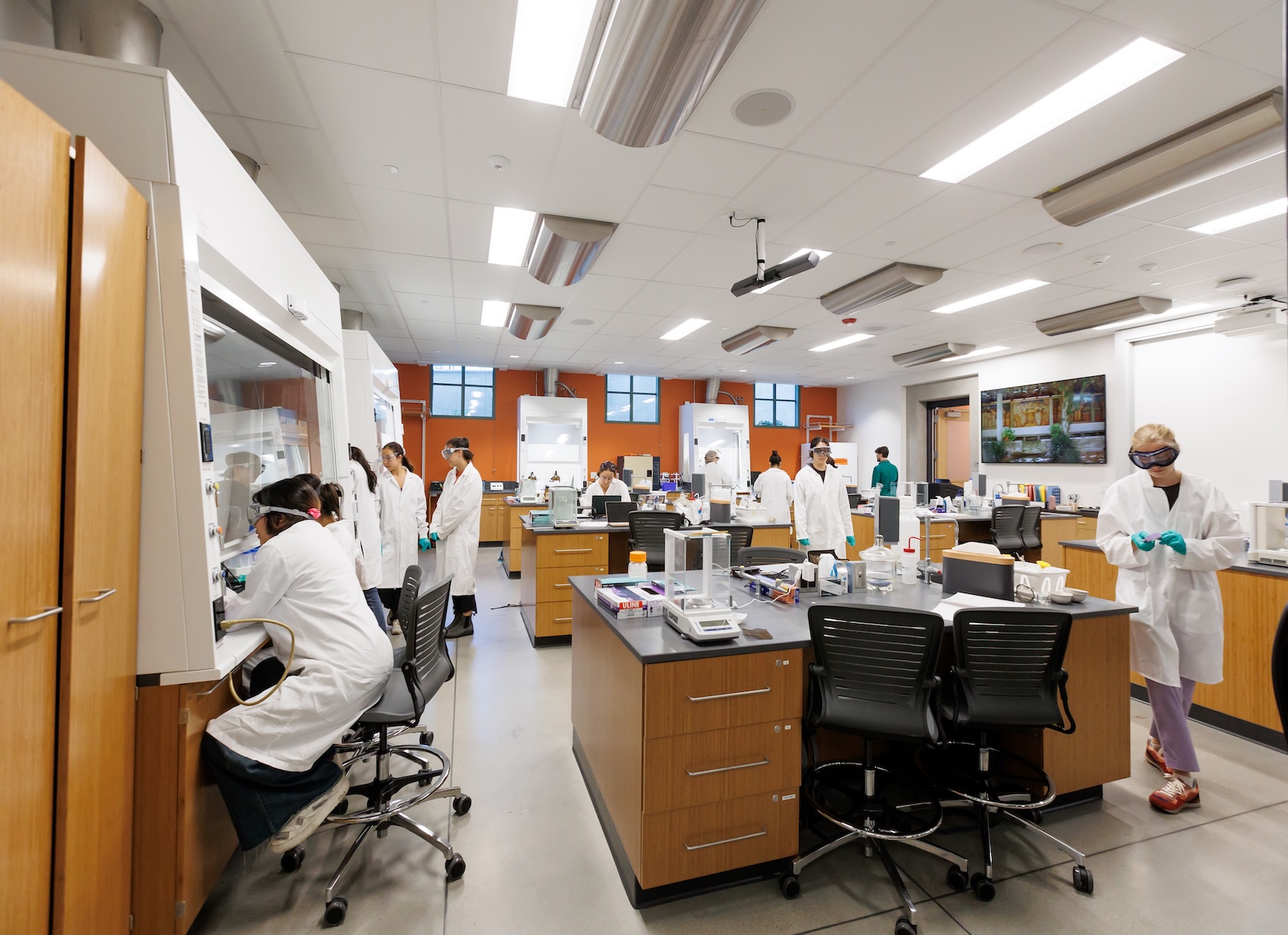
“The Nucleus is far more than a new facility—it’s a catalyst for how science is taught, learned, and advanced at Scripps,” says Weinberg Family Dean of the Department of Natural Sciences Ulysses J. “UJ” Sofia. “By bringing together cutting-edge laboratories, collaborative spaces, and interdisciplinary programs, the Nucleus expands what’s possible for our students and faculty alike.”
A Collaboration That Strengthens Both Colleges—Made Possible by You
The Nucleus also deepens the partnership between Scripps and Pitzer College in meaningful and exciting ways. By physically and academically bridging the campuses, the facility encourages shared classes, collaborative research, and new cross-college learning communities. It provides the infrastructure needed to meet rising enrollment in STEM programs while reinforcing both institutions’ reputations as leaders in innovative science education.
This extraordinary progress would not exist without the generosity of donors who believed in the promise of The Nucleus long before its walls were built. Gifts from Scripps Trustees such as Jennifer McDonnell P’18; the John Stauffer Charitable Trust; the Carolyn Lake Claremont Foundation; Sara Zion and Tushar Shah P’26; and several anonymous donors provided the crucial momentum that brought the project to life.
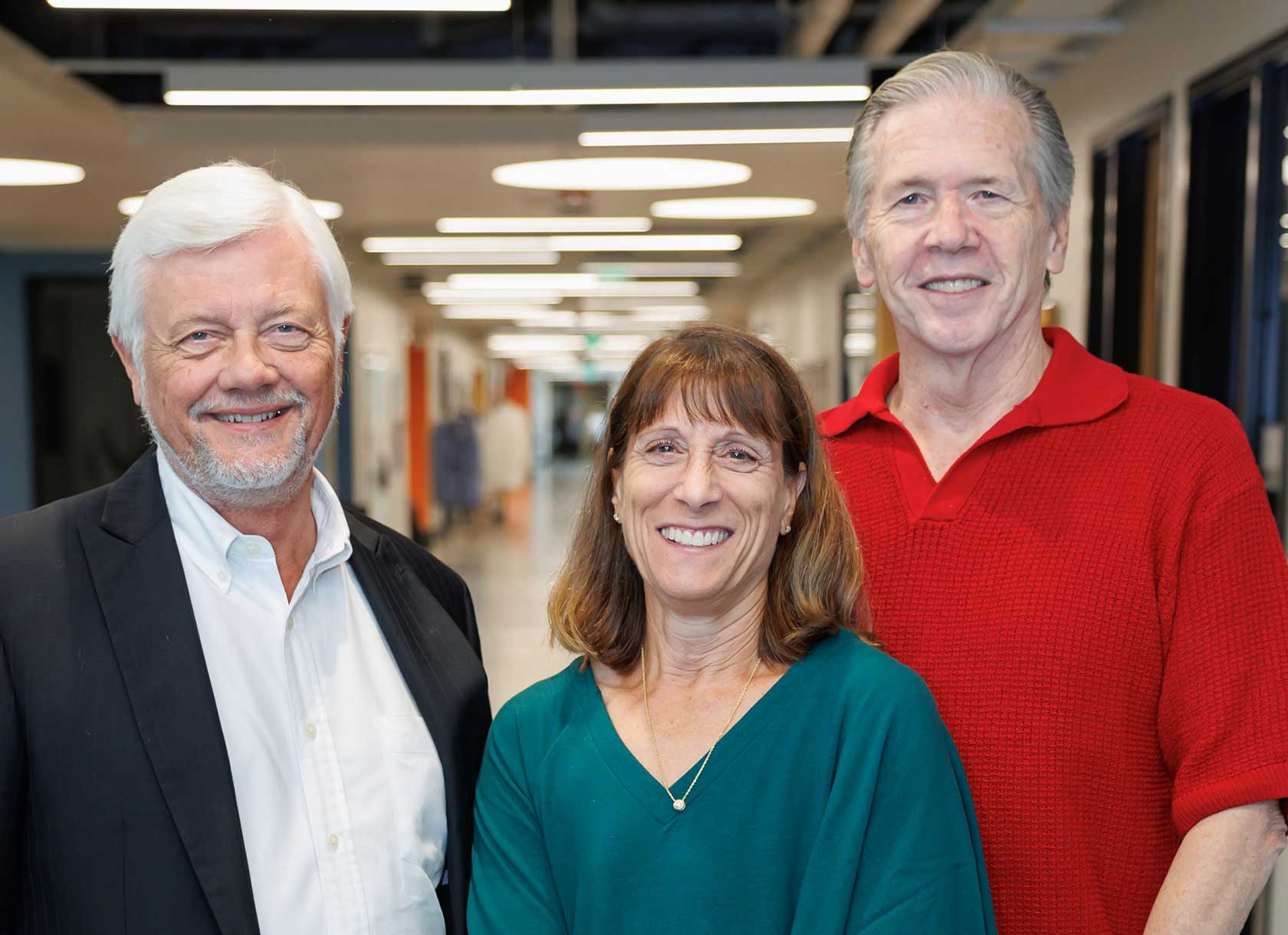
William F. Kruse, Amy Marcus-Newhall, and Michael Whalen at the grand opening of The Nucleus
Looking Ahead
The Nucleus is already shaping the next generation of scientists, researchers, and innovators.
Students from every discipline—not just STEM—are using the space to explore big questions and build new skills. Faculty are launching research projects that push their fields forward. And the College is charting a bold path toward deeper interdisciplinary integration.
“It’s deeply energizing to walk through the building and see students and faculty working side by side,” says Vice President for Academic Affairs and Dean of Faculty Mary Hatcher-Skeers. “At The Nucleus they test ideas, ask bold questions, and learn from one another in ways that simply weren’t possible before.”
Additional philanthropic support will ensure that The Nucleus evolves new technologies, classes, and research opportunities so Scripps students and faculty can lead lives of scientific distinction, creativity, and purpose. The center’s first year is just the beginning to learning what we can achieve together—and a promise of the discoveries still to come.
To support women in STEM at Scripps click here.