

Image credit: Abdiel Jacobsen
By Emily Glory Peters
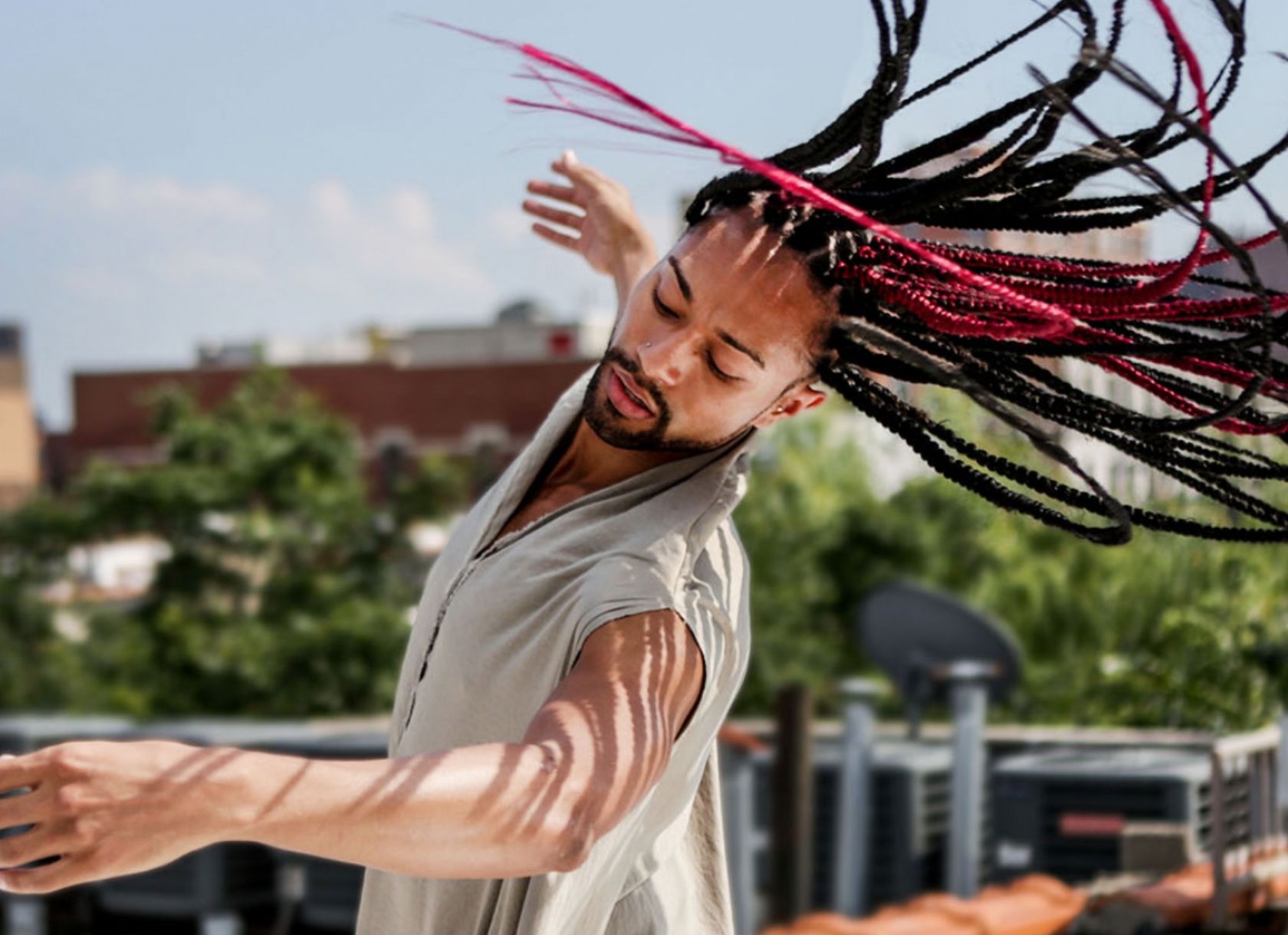
The New York Times once described Assistant Professor of Dance Abdiel Jacobsen’s approach to dance as “expansive,” “liberated,” and “joyful.” At Scripps College, Abdiel has infused all this and more into their curriculum, creating extraordinary learning experiences that linger long after the dance floor clears.
Abdiel’s mastery of dance is as deep as it is broad. They have served as principal dancer with the Martha Graham Dance Company—the oldest and one of the most prestigious dance companies in the US—and taught at The Julliard School, Harvard University, and Stanford University. Abdiel has also competed as a professional dance champion in same-sex ballroom, hustle, and salsa, and has directed, written, and choreographed countless performances, including numerous short films of their own.
In 2019, Abdiel shattered ballroom orthodoxy when they and their dance partner, Kristine Bendul, competed in the professional division of Dancesport. They equally exchanged positions as leader and follower, becoming the world’s first gender-neutral couple to swap roles in all five dances of the Professional American Rhythm category.
Yet among these accolades, one passion stands out for Abdiel: Latin Hustle.
Linking Scripps students to a decades-long dancing legacy
Like most turning points, says Abdiel, their first encounter with Latin Hustle is easy to recall.
“While living and dancing professionally in New York City, my friend Eriko Tsubosaka—a house dancer from Japan—told me to go to a hustle party at a studio called Dancesport, owned by Paul Pellicoro,” they say. “It had been running for decades, and many of the OGs and longtime hustle dancers were there. I was transfixed.”
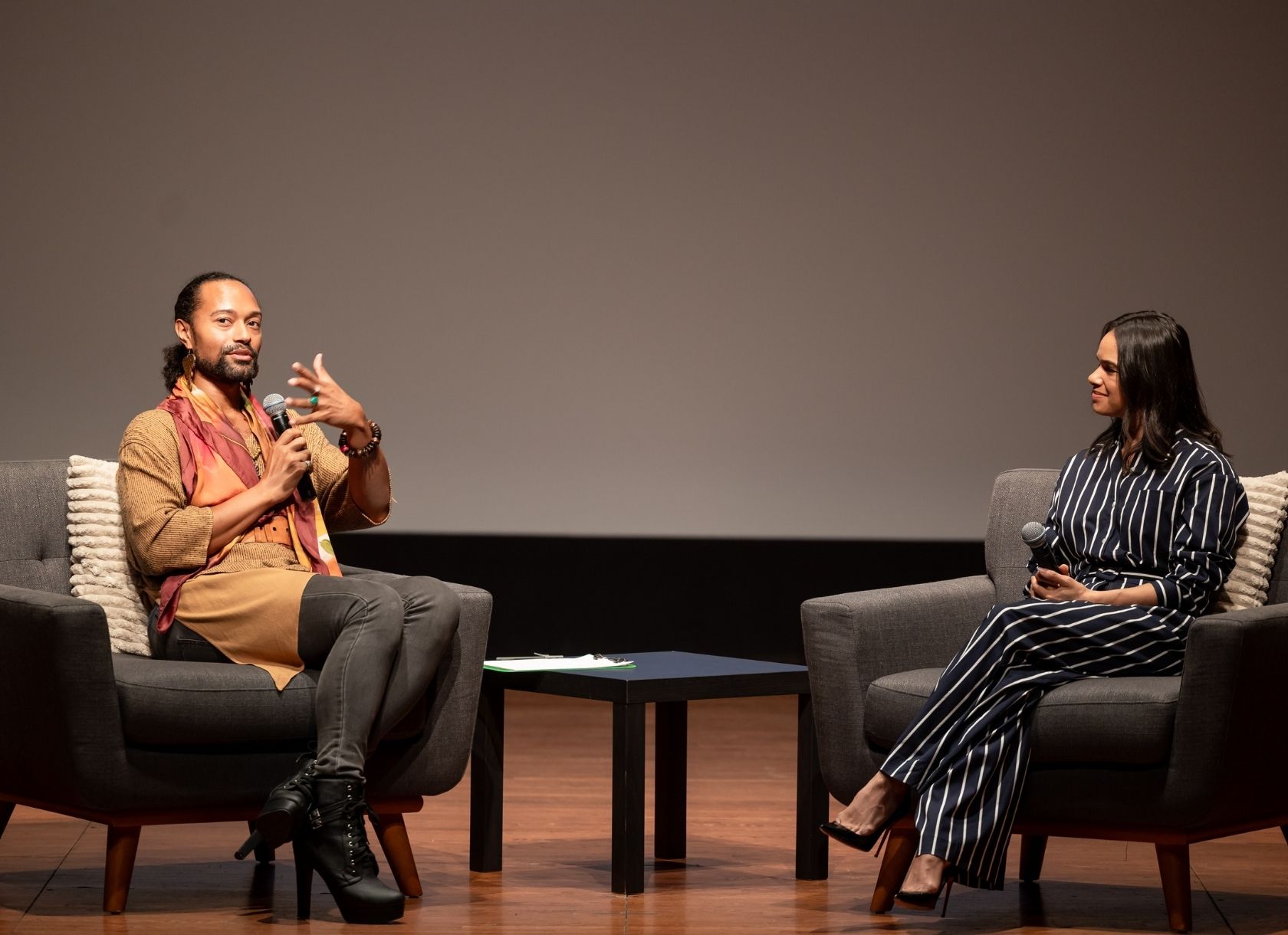
Abdiel Jacobsen moderating a conversation with Misty Copeland at Scripps Presents in April 2025
Now, the partnered style that lit up dance floors across the Big Apple since the early 70s has found a home at Scripps. Here, Abdiel isn’t just teaching steps—they’re reversing historic erasure.
“Latin Hustle started in the South Bronx in the 1970s by Puerto Rican and Black teenagers. It was significantly innovated by the gay community and has a rich and deep legacy that’s overlooked in American culture,” Abdiel explains. “This ignites me to use my platform to bring more representation to the dance form and to the people who contributed to its formation and evolution.”
True to that mission, Abdiel models their curriculum after Latin Hustle’s birthplace: street and club social dance parties. Class for students starts with an emotional check-in, proceeds with improvised dance material, and moves into technical concepts within dance patterns. Readings and viewings are also a must, Abdiel adds, to help students grasp the historical context of dance.
“It’s important to learn the steps, and it’s equally important to experience the settings from which it came and still exists today,” they say. “This transforms the classroom into an immersive space where students learn to be mindful, respectful, and contributive participants in the culture they’re studying. It’s a crucial aspect of learning that I advocate for that’s often lacking in Western higher education, especially when learning about Black and Latino/a/e/x dance practices.”
Dance culture continues to deepen at Scripps
Since their introduction at Scripps in 2024, Abdiel’s courses in Latin Hustle and modern dance have been met with enthusiasm and a hunger for more.
“I’ve developed a new course, Latin Hustle II, in collaboration with accompanist Ahtoy Juliana WonPat-Borja, to teach more complex patterns, concepts, and compositional components,” Abdiel explains. The popularity of the dance has crept off campus, too. “Some students have even used the practice from class in outside performances, competitions, and social gatherings,” they add.
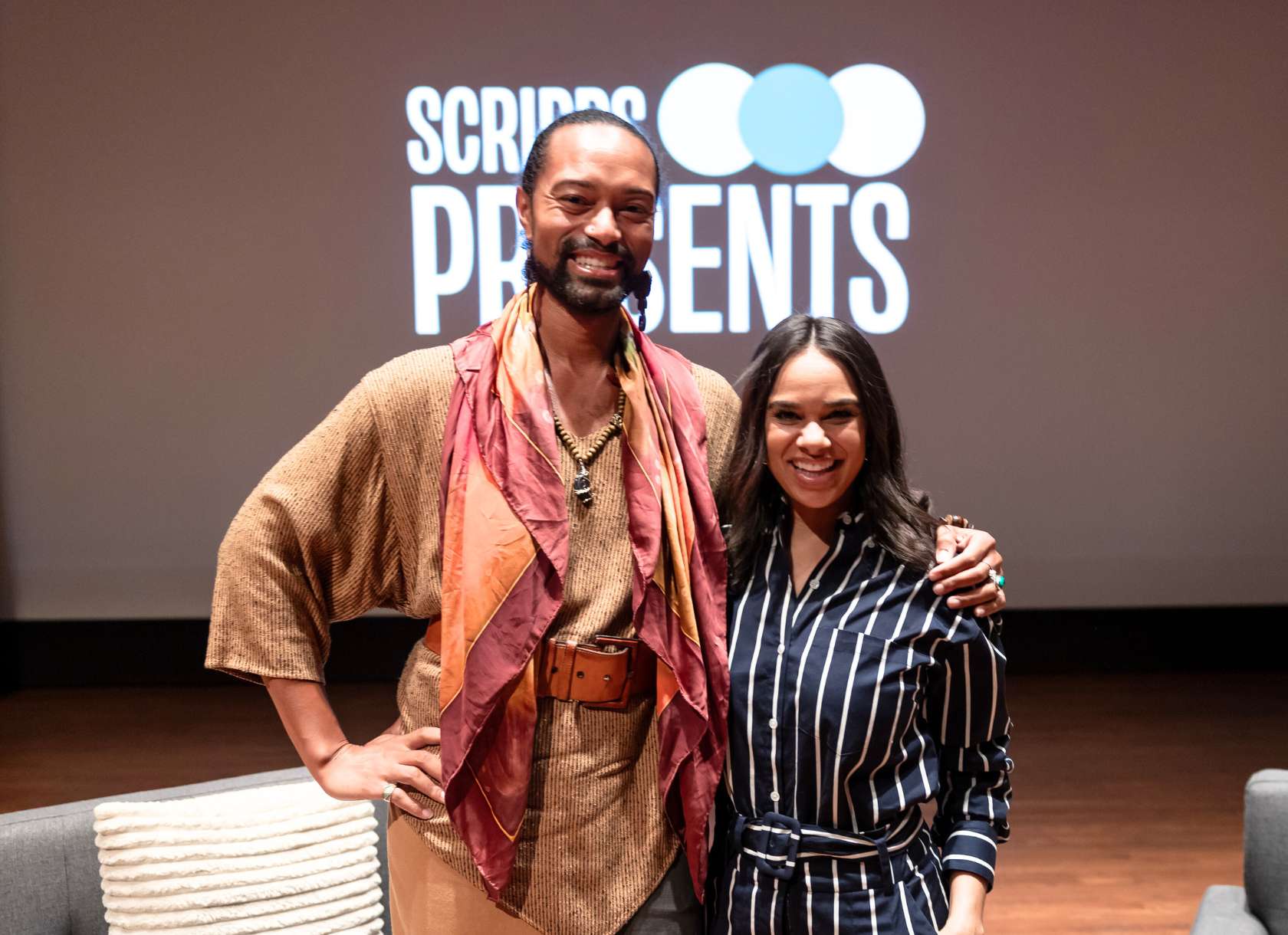
Abdiel Jacobsen and Misty Copeland
At Scripps, the expansion of dance as a liberal art is shaping the College’s next century. The forthcoming Centennial Plaza Project will include the construction of the College’s long-awaited new dance facility, providing state-of-the-art space for study and performance. Dance groups, like the 5C Dance Company and 5C Freestylin’ Collective continue to attract Scripps students from all majors. And during the College’s most recent and highly successful Day of Giving, Abdiel was instrumental in inspiring Scripps alums, families, staff, faculty, and friends to donate to the Department of Dance.
This April, the College community’s interest in dance reached new heights during a sold-out headline event for Scripps Presents. Abdiel hosted one of the world’s most iconic ballerinas—Misty Copeland—for a public conversation about leadership, the power of being an outlier, and the need for greater progress in dance.
Their thoughtful exchange was emblematic of what Abdiel has brought to Scripps: dance as an instrument of identity, understanding, and kinship.
“A big motivation for what I do is helping students feel comfortable engaging with local events outside of the classroom,” they say. “I hope they take away a sense of awareness and confidence to attend a hustle party where they can contribute to the energetic vibe of a communal, celebratory dance party.”